
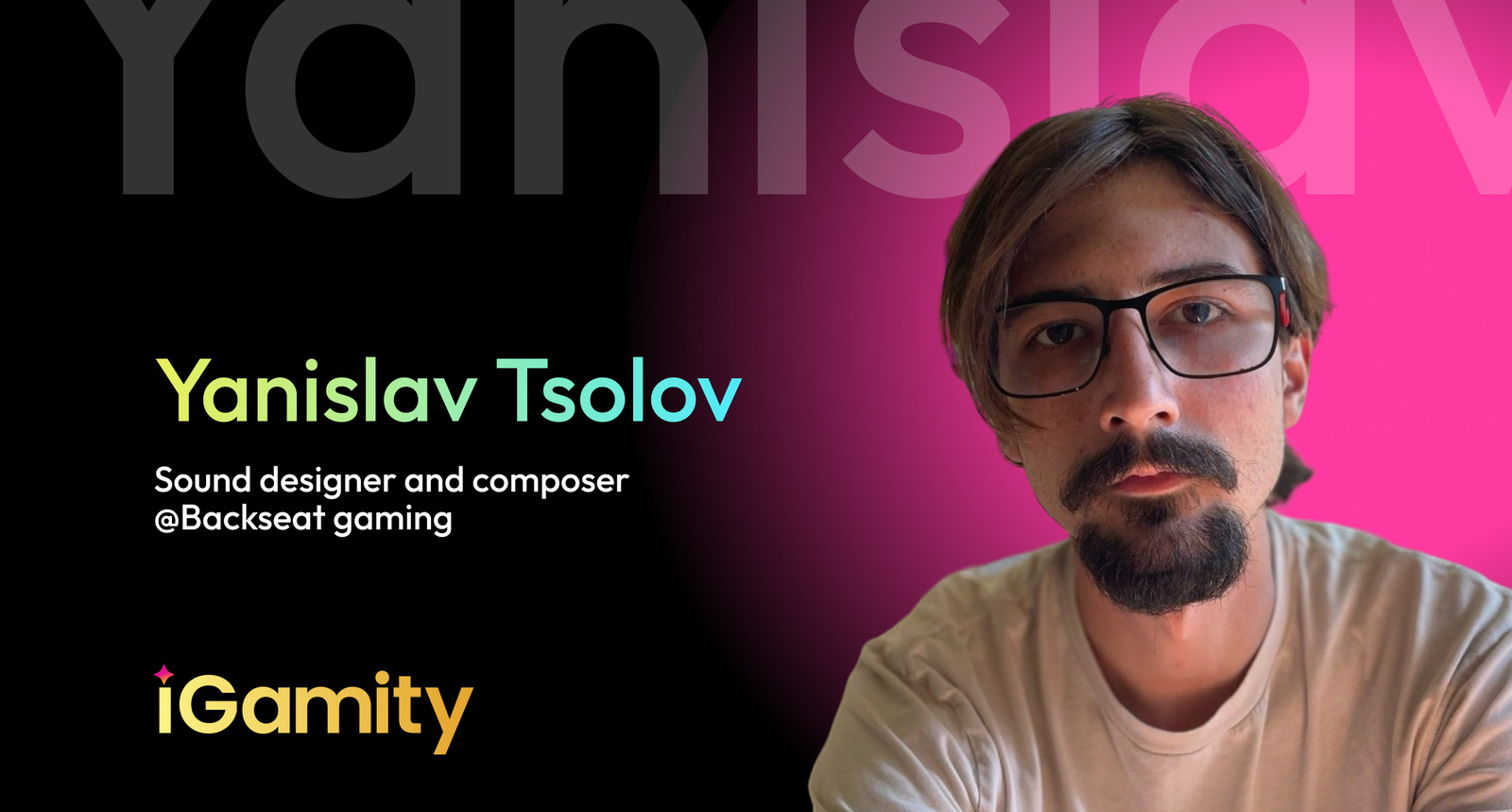
Why strong game identity, player emotion, and creative consistency matter more than ever in modern iGaming.
The iGaming industry moves fast. New games launch constantly. Themes repeat. Attention spans shrink.
In a market filled with visual noise, creating something memorable has become one of the industry's biggest creative challenges.
For Yanislav Tsolov, memorable games are not built through excess. They are built through identity, clarity, and emotional connection.
This story explores the thinking behind modern slot production and how creativity remains the strongest differentiator in a saturated industry.
The Beginning. Finding Creativity Inside Structure
Creative careers in iGaming rarely begin with a clear roadmap.
They evolve through experimentation, curiosity, and learning how entertainment products are actually built.
For Yanislav Tsolov, the journey into the industry was not just about creating visuals. It was about understanding how every creative decision influences player experience.
That realization changes the way games are approached.
A slot game is no longer:
- Just a theme
- Just an animation
- Just a collection of symbols
It becomes a carefully designed experience where art, timing, sound, and interaction work together.
In a Crowded Market, Identity Becomes Everything
One of the biggest challenges in modern iGaming is repetition.
The market is filled with:
- Similar themes
- Familiar mechanics
- Recycled visual styles
Standing out requires more than technical quality.
It requires identity.
At Backseat Gaming, this thinking is reflected through:
- Strong thematic cohesion
- Clear visual direction
- Personality-driven experiences
- Consistency across every part of production
Because players may forget mechanics. But they remember how a game feels.
Designing for Emotion, Not Just Attention
Modern slot production is deeply tied to emotional pacing.
Every moment inside a game creates a reaction:
- Anticipation before the reels stop
- Excitement during feature reveals
- Satisfaction in reward sequences
Yanislav's perspective highlights an important truth.
Players do not connect with isolated assets. They connect with emotional flow.
This is where:
- Animation timing
- Visual escalation
- Audio synchronization
- Scene composition
All become part of a single experience.
The strongest games are not necessarily the loudest. They are the ones with controlled emotional rhythm.
Creativity and Constraints Must Coexist
There is a misconception that creativity thrives without limits.
In game production, the opposite is often true.
Real creativity appears inside constraints:
- Production deadlines
- Technical limitations
- Market expectations
- Performance requirements
This balance defines professional iGaming production.
The challenge is not simply creating beautiful work. It is creating work that:
- Functions technically
- Performs commercially
- Maintains artistic consistency
- Ships on time
That balance is what separates concepts from finished products.
The Importance of Team Alignment
Behind every polished game is alignment between multiple departments.
Artists, animators, developers, sound designers, and product teams must move in the same direction.
Without alignment:
- Visual quality becomes inconsistent
- Features feel disconnected
- Production slows down
Strong studios build systems where communication supports creativity instead of blocking it.
This is especially important in modern iGaming pipelines where production speed continues to increase.
AI in Creative Workflows. Tool or Threat?
AI is now part of the conversation across every creative industry.
In iGaming, its influence is growing quickly:
- Concept ideation
- Asset exploration
- Workflow automation
- Production assistance
But AI also introduces risks:
- Repetitive visual outputs
- Loss of originality
- Generic art direction
The key is understanding the role AI should play.
It can accelerate workflows. But it cannot replace creative judgment.
Games still need:
- Direction
- Taste
- Emotional understanding
- Human decision-making
Technology can support creativity. It cannot define it.
Advice for Emerging Creatives in iGaming
For creatives entering iGaming today, technical skills alone are not enough.
The industry increasingly values people who understand:
- Systems
- Collaboration
- Production realities
- Player psychology
The advice is simple:
- Build strong fundamentals
- Learn how games function
- Stay adaptable
- Observe how players react to experiences
- Focus on clarity, not complexity
Most importantly. Develop your own creative perspective.
Because individuality is becoming more valuable in a market filled with sameness.
Key Takeaways from Yanislav Tsolov
- Strong game identity is essential in saturated markets.
- Emotional pacing matters more than visual overload.
- Creativity works best within structure and constraints.
- Team alignment directly impacts production quality.
- AI should support creative workflows, not replace direction.
- Originality remains one of the industry's strongest advantages.
Highlighting the Minds Behind the Games
The iGaming industry is built by people making thousands of creative decisions behind the scenes.
Conversations like this with Yanislav Tsolov reveal the thinking behind those decisions.
Not just how games are made. But how experiences are shaped.
Through these stories, iGamity continues to highlight the creative voices pushing the industry forward and building the future of interactive entertainment.
Full Talk: https://igamity.com/yanislav-tsolovs/
More Talks: https://igamity.com/talks/