
⭐ GAME DETAILS
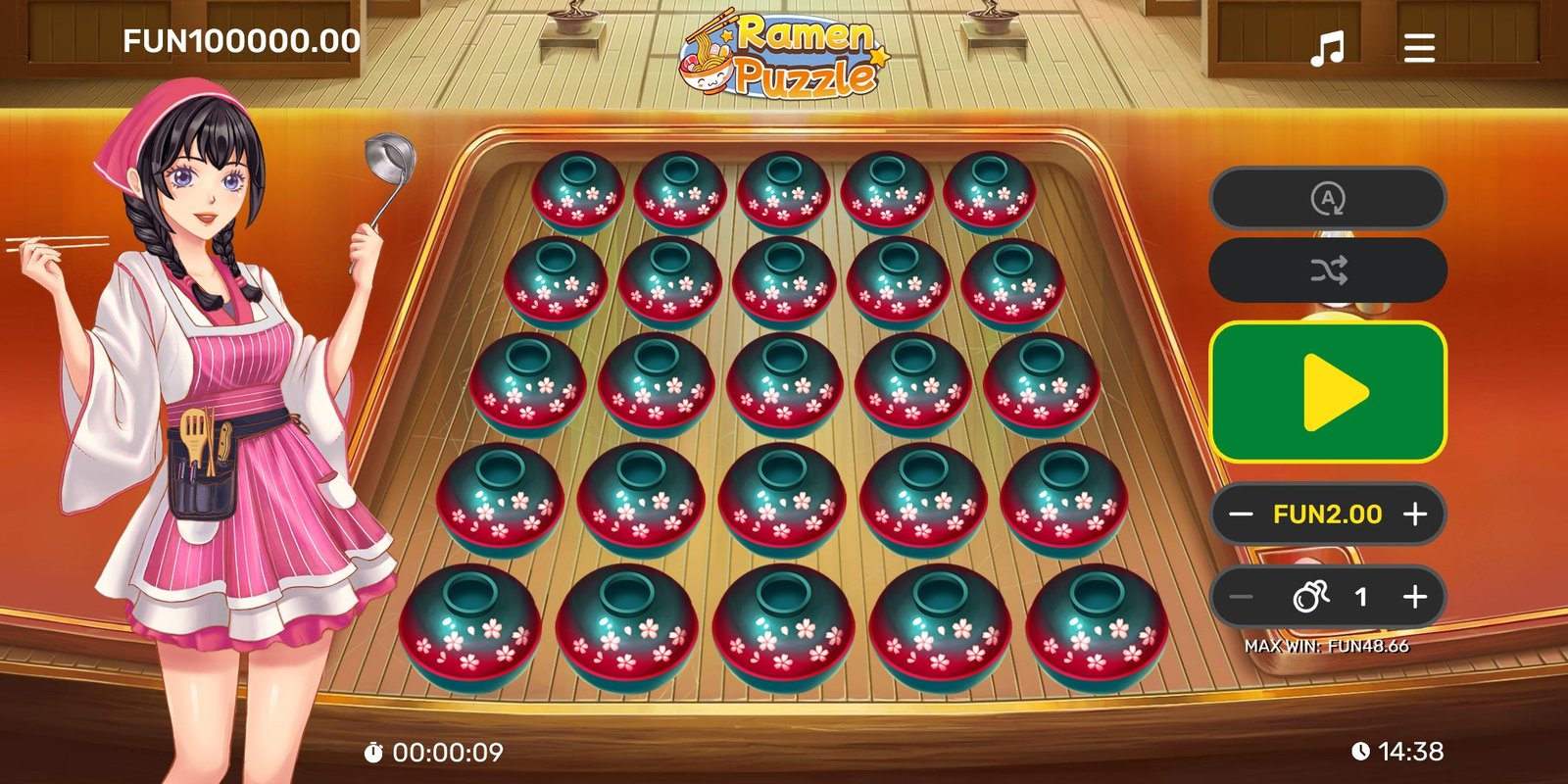
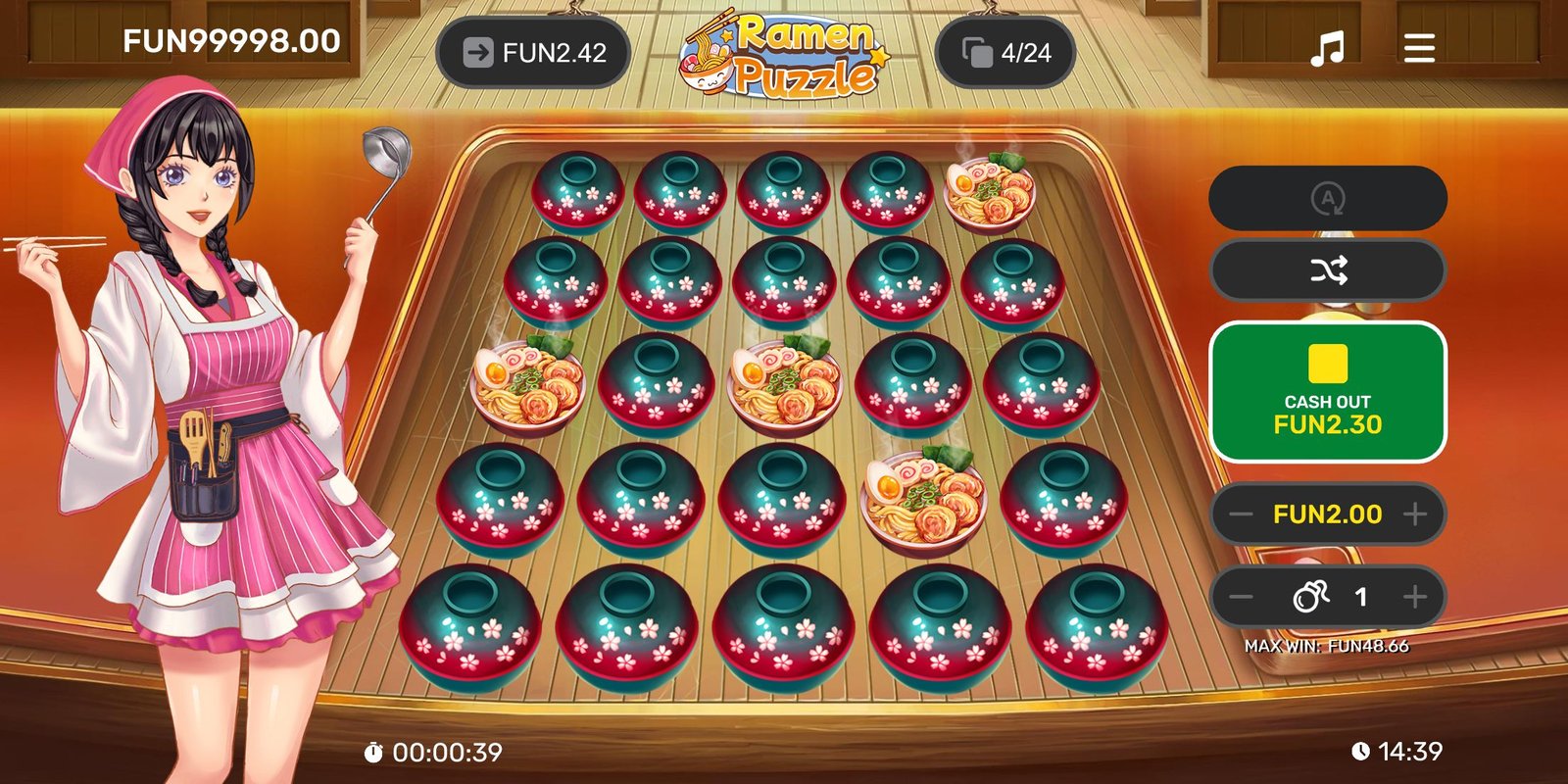
Ramen Puzzle by Gaming Corps is a Japanese ramen-themed "Mines"-style game. It features a 5×5 grid with 25 hidden tiles, offers three RTP settings (97.32%, 94.40%, and 92.40%), and has a volatility rating of 9 out of 10. Its core mechanic involves uncovering tiles: players reveal ramen bowls to increase their prize, while uncovering food scraps ends the current sequence and results in the loss of accumulated winnings. The number of tiles containing scraps can be adjusted, allowing players to control the difficulty and risk of each round. The game also includes the Treasure Boost feature.
HIGHLIGHTS OF INNOVATIVE FEATURES
Turning the Minesweeper-style game into a culinary puzzle
The strongest creative choice in Ramen Puzzle lies not in inventing a completely new game mechanic, but in the creative reinterpretation of the classic Minesweeper format.
The underlying mechanic remains simple: the player reveals tiles and decides whether to continue or cash out their winnings.
What changes is the meaning of those tiles.
Successfully revealing a tile means discovering a ramen ingredient, whereas a failure results in leftovers. This imbues an otherwise abstract risk mechanic with an intuitive, playful context.
The strongest creative decision in Ramen Puzzle is transforming the classic Minesweeper game into an experience set in a Japanese ramen restaurant.
Instead of presenting the player with a generic grid of hidden mines, the 5×5 board becomes a setting where food items are revealed. Ramen bowls, ingredients, restaurant details, and Japanese-inspired visuals give the game a distinct culinary personality.
The visual style inspired by anime and manga is particularly effective because it takes the theme beyond the mere use of Japanese food imagery. The presence of Ms. Kawai introduces a recognizable human character and helps define the game's playful nature.
The visual metaphor is exceptionally clear. Successfully selecting a tile reveals a bowl of ramen and increases the reward; conversely, an unfortunate choice uncovers food scraps and ends the sequence.
This establishes an immediate link between the visual language and the game mechanics. Players do not need complex explanations to understand what constitutes a positive or negative outcome.
Revealing tiles is the core animated event, so the presentation must ensure that every choice feels significant.
The player selects a tile, reveals a ramen bowl, watches the prize increase, and decides whether to continue or cash out. If food scraps are revealed, the sequence ends, and the accumulated prize is lost.
This turns each individual reveal into a brief moment of suspense.
One of the strongest interaction design choices is allowing players to select the number of tiles containing food scraps before the round begins.
The provided information indicates that this number can range from 1 to 24. Increasing the number of scrap-filled tiles raises the risk, while reducing them creates a safer experience.
Visually, this means the player isn't just choosing a bet amount; they are selecting the game's risk level itself.
The most important animated moment occurs after a successful reveal.
The player sees the increased prize and must decide whether to secure it or keep taking risks.
As more ramen bowls are uncovered, the potential reward becomes more attractive, but the likelihood of losing the accumulated value also rises significantly.
This creates a clear, fluid tension curve without requiring complex animation systems.
The Treasure Boost feature adds an extra layer of progression by lighting up inactive indicators during successful sequences.
This gives the player a visual cue regarding their progress without distracting from the core tile-revealing mechanic.
The sound design reinforces the lively atmosphere of a typical Japanese ramen shop.
The audio combines upbeat, Japanese-inspired musical elements with ambient restaurant sounds, food-related effects, cues for revealing tiles, prize-increase alerts, danger effects, and payout signals.
The soundtrack should remain relatively light during the initial stages, gradually building tension as the accumulated prize grows.
The most important audio distinction is the one between successfully revealing a ramen dish and discovering leftovers.
Revealing a ramen dish should be accompanied by a positive, satisfying cue, whereas leftovers should trigger an immediate, negative interruption.
As the player successfully progresses, a more intense audio response can convey that the accumulated prize is increasing in value.
This makes sound a key element in communicating the game's risk-and-reward dynamics.